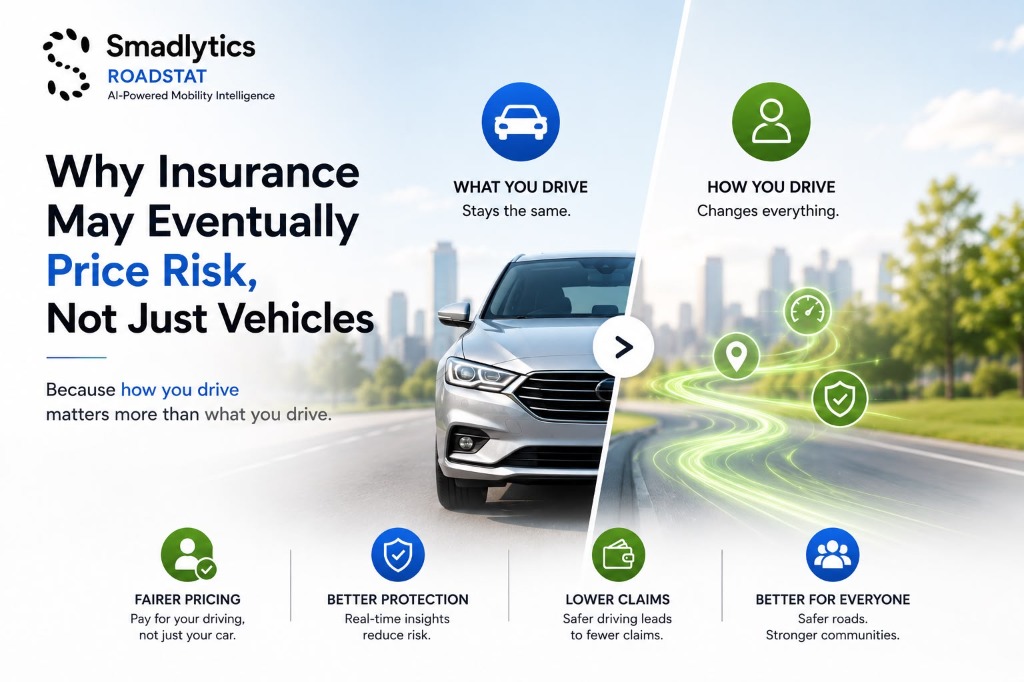
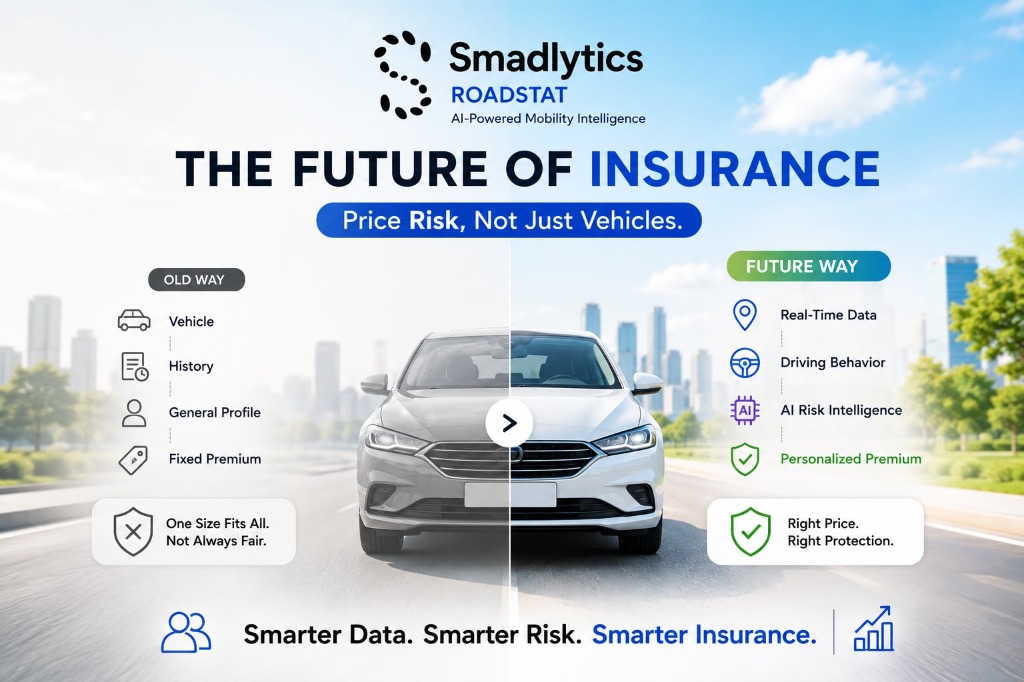
For decades, auto insurance has largely been built around a familiar question:
The answer helps determine the cost of coverage.
Vehicle type, repair costs, location, driving history, claims history, mileage and other rating factors all contribute to how insurers assess risk. But connected vehicles, telematics, artificial intelligence, IoT sensors and real-time analytics are changing what insurers can see.
The more important question may gradually become:
Well, that is a very different question!
It could lead the insurance industry toward a future where risk intelligence becomes more important than vehicle classification alone.
Usage-based insurance is already an early example of this shift. The National Association of Insurance Commissioners (NAIC) describes telematics-based insurance as a model that can use mileage and driving behavior — including speed, hard braking, acceleration, cornering, time of day and location — to help determine premiums.
The next evolution may be moving from simply collecting driving data to understanding risk from that data.
That is where AI-powered asset and mobility intelligence can become important.
From Vehicle Pricing to Risk Pricing
Traditional insurance pricing has always been about estimating future losses. Insurers use historical information and statistical models to estimate how likely a policyholder is to make a claim and how expensive that claim might be.
- The vehicle matters.
- The driver matters.
- The location matters.
- The claims history matters.
- The mileage matters.
But imagine if an insurer could also understand the actual operating behavior of an asset in near real time.
For instance: Two identical delivery vans could have the same make and model, the same age, the same geographic location, similar annual mileage, and similar coverage — yet their actual risk profiles could be very different.
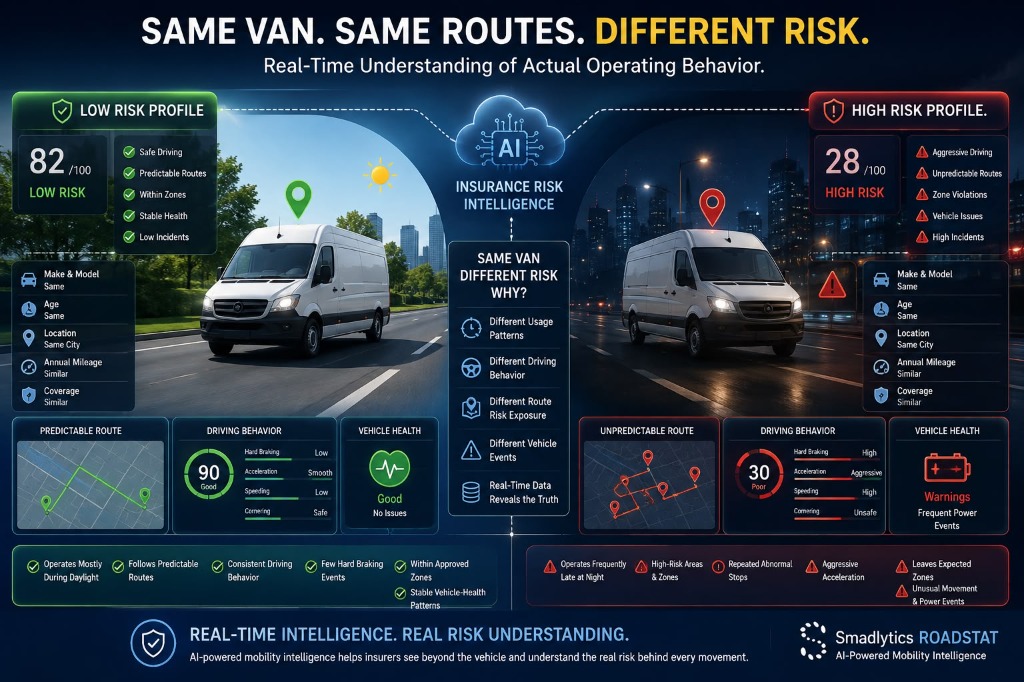
From a traditional vehicle classification perspective, they may look remarkably similar. But from a risk intelligence perspective, they are not.
| Vehicle 1 — Low Risk | Vehicle 2 — High Risk |
|---|---|
| Operate mostly during daylight | Frequently operate late at night |
| Follow predictable routes | Travel through higher-risk areas |
| Have consistent driving behavior | Show repeated abnormal stops |
| Experience few hard braking events | Experience aggressive acceleration |
| Remain within approved operating zones | Leave expected geographic zones |
| Show stable vehicle-health patterns | Display unusual movement patterns |
| Have durable power events | Experience repeated battery or power events |
So, What Is Risk-Based Auto Insurance?
It is an approach in which insurance pricing increasingly reflects measurable indicators of an individual driver's, vehicle's or fleet's actual risk rather than relying primarily on broad historical categories.
This does not mean traditional insurance factors disappear. Instead, the model can evolve from:
This is already beginning through usage-based insurance (UBI) and telematics. The NAIC notes that UBI can use individual and current driving behavior rather than relying only on aggregated historical statistics, allowing premiums to be more closely aligned with driving behavior. The next opportunity is to make that data more intelligent.
GPS Tells Where. Risk Intelligence Tells More!!!
GPS tracking changed asset visibility. A fleet manager could finally see: Where is my vehicle? That was a major improvement. But location alone doesn't explain risk.
For instance, a vehicle moves 10 kilometres outside its normal route. A GPS platform may generate:
Useful? Yes!!!
But an intelligence platform could potentially ask:
- Is this route deviation normal for this vehicle?
- Has this driver made similar deviations before?
- Did the deviation occur at an unusual time?
- Was there an unusual stop before the deviation?
- Did vehicle behavior change simultaneously?
- Is the location associated with previous incidents?
- Is this pattern consistent with potential theft or misuse?
The difference is subtle but powerful. GPS reports an event. AI can interpret the event in context. That distinction is at the heart of the transition from asset tracking to asset intelligence.
What Is AI Asset Tracking?
AI asset tracking combines asset location data, IoT data, behavioral information, historical patterns and artificial intelligence to identify anomalies, understand asset behavior and generate actionable insights.
Traditional Tracking Asks
Where is the asset?
AI-Powered Asset Tracking Asks
What is happening? Is it normal? Why might it be happening? What could happen next? What should we do?
This creates a new category: instead of treating location as the final output, location becomes one of many signals used to understand operational risk.
Why This Matters to Insurance
Insurance companies are fundamentally in the business of understanding risk. Better risk information can potentially improve:
- Underwriting
- Risk segmentation
- Pricing
- Claims analysis
- Fraud detection
- Loss prevention
- Customer engagement
- Driver safety programs
The NAIC notes that insurers already use big data and machine-learning approaches to influence underwriting, pricing, marketing and claims decisions, while telematics can provide real-time driver behavior and usage information.
The future may not simply be about collecting more data. It may be about extracting better risk intelligence from the data already available!
The Future Insurance Model Could Look Different…
From Telematics to Predictive Risk Intelligence — telematics is an important foundation. It can capture information such as mileage, speed, acceleration, hard braking, cornering, time of day, location and vehicle events. These signals can help insurers understand driving behavior. But raw data is not intelligence.
Imagine an insurer receives millions of telematics events. A hard brake by itself may mean very little. One hard brake does not necessarily mean a driver is high risk. But what if the system identifies:
- Frequent hard braking
- Repeated aggressive acceleration
- Unusual night driving
- Repeated route deviations
- Increasing incident frequency
- Higher-risk operating locations
The combination could become more meaningful than any single event. This is where AI Risk Intelligence becomes valuable — AI can help identify patterns across multiple signals rather than treating every event independently.
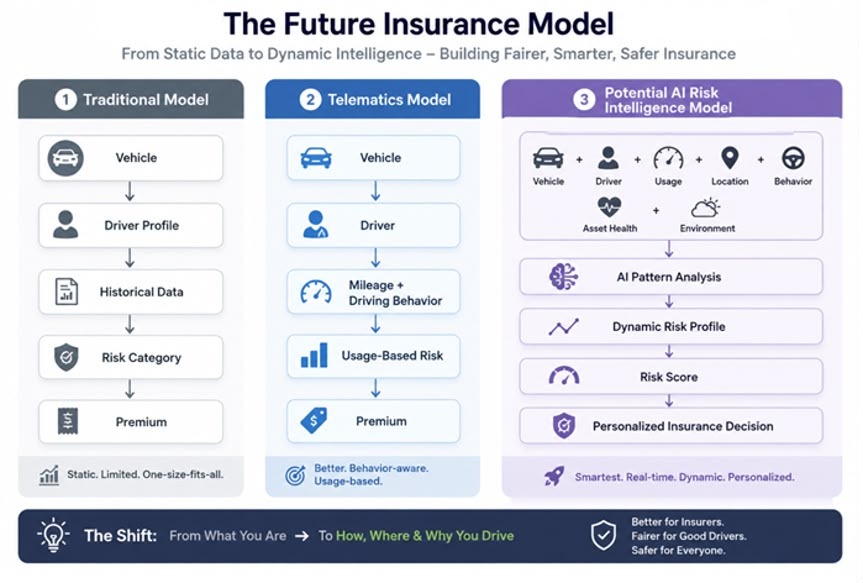
This does not mean premiums will become continuously dynamic everywhere. Regulation, consumer consent, insurer practices, data quality, fairness, privacy and actuarial validation will all influence how these models evolve. But the direction is clear: insurance is gaining access to increasingly granular information about actual vehicle use.
The Two Identical Vehicles Problem
This may become one of the most interesting questions for insurers. Imagine two identical trucks — same model, same year, same city, same declared usage, same coverage.
Yet Vehicle 1 consistently demonstrates lower-risk operating patterns, and Vehicle 2 consistently demonstrates higher-risk patterns. Should both vehicles always have exactly the same risk profile?
Traditional insurance models may use broad rating categories to answer this. AI-powered insurance models could potentially introduce much more granular behavioral and usage signals.
That creates the possibility of individualized risk intelligence.
This Is Where Smadlytics Can Make a Difference
Smadlytics is not an insurance company. It does not determine insurance premiums. Instead, its opportunity is to provide an AI-powered Mobility Intelligence layer that can help organizations understand the behavior and risk associated with connected assets.
ROADSTAT can bring together signals such as real-time asset location, geofencing, asset movement, tamper events, battery health, vehicle activity, usage patterns, incident information, behavioral signals and operational analytics.
The goal is not simply to create another map with moving vehicles. The goal is to transform connected asset data into actionable intelligence.
This is the market opportunity in AI-powered asset intelligence for insurance.
How Smadlytics Could Support Insurance Intelligence
1. Driver Risk Intelligence
- Aggressive acceleration
- Hard braking
- Excessive speeding
- Frequent abnormal stops
- Unusual driving hours
- Repeated route deviations
2. Vehicle Usage Intelligence
- Mileage & operating hours
- Route patterns
- Frequency of use
- Geographic exposure
- Asset utilization
3. Theft Risk Intelligence
- Unusual movement
- Tampering events
- Battery events
- Unexpected ignition activity
- Geographic anomalies
4. Vehicle Health Intelligence
- Battery health monitoring
- Abnormal activity signals
- Predictive maintenance
- Connected-asset diagnostics
5. Fleet Risk Intelligence
- High-risk drivers
- High-risk routes
- High-risk operating times
- Abnormal asset behavior
- Repeated incidents
- Operational patterns associated with losses
Insurance May Move From "Pay for the Car" to "Pay for the Risk"
This does not mean the vehicle becomes irrelevant. The vehicle will continue to matter. Repair costs matter. Replacement costs matter. Safety features matter. Vehicle technology matters.
But the vehicle may increasingly become only one component of a larger risk model. The broader formula could eventually look more like:
Insurance Risk Formula
Vehicle + Driver + Usage + Behavior + Environment + History + Real-Time Signals
And AI can sit between those signals and the decision-making process.
What Does This Mean for Drivers?
Potential Benefits
- Lower-risk drivers could receive more personalized pricing
- Drivers could receive feedback about risky behavior
- Safer driving could become more financially valuable
- Drivers could better understand their risk profile
Potential Concerns
- What data is collected?
- Who owns the data?
- How long is it retained?
- Can the driver access it?
- Can incorrect data be challenged?
- Does a single unusual event affect pricing?
The NAIC specifically identifies privacy and data-use concerns as important issues in usage-based insurance. Therefore, the future of AI insurance cannot be built only on better algorithms. It also requires transparency, responsible data governance, explainability and consumer trust.
What Does This Mean for Insurers?
For insurers, the opportunity is bigger than simply offering a telematics discount. The real opportunity is creating a more sophisticated risk intelligence ecosystem.
| Application | Opportunity |
|---|---|
| Underwriting | Better understanding of individual and fleet risk |
| Pricing | More granular risk segmentation where permitted and appropriately validated |
| Claims | Additional context around incidents |
| Loss Prevention | Identifying patterns that may precede incidents |
| Customer Engagement | Helping policyholders understand and improve driving behavior |
| Fleet Insurance | Understanding risk across commercial fleets instead of treating every asset identically |
The Future May Be Risk-Aware Mobility
The next generation of connected mobility will likely be about more than knowing where vehicles are. It will be about understanding:
- How they move.
- Where they move.
- When they move.
- How drivers behave.
- What assets are doing.
- What is abnormal.
- What could happen next.
- What action should be taken?
This is the foundation of Mobility Intelligence.
Smadlytics ROADSTAT: From Tracking to Intelligence
- GPS can tell you where an asset is.
- IoT can tell you what is happening.
- Analytics can tell you what changed.
- AI can help determine what it means.
Smadlytics brings these signals together into an AI-powered Mobility Intelligence Platform designed to help organizations understand, predict and act on connected asset behavior. Because the future of connected mobility may not simply be about tracking assets — it may be about understanding the risk behind every movement.
Frequently Asked Questions
The Bigger Shift
The most important change may not be the introduction of another insurance product. It may be the change in the question insurers ask.
For years, the question has been: What vehicle are we insuring?
The emerging question could become: What risk is this vehicle actually demonstrating?
The vehicle still matters. The driver still matters. History still matters. But real-world behavior may increasingly matter too.
And as connected assets generate more data, the competitive advantage may belong to organizations that can transform that data into AI-powered risk intelligence.
The future of insurance may not be about abandoning vehicle-based pricing. It may be about making pricing increasingly risk-aware, behavior-aware, usage-aware and intelligence-driven.
Ready to Explore AI-Powered Mobility Intelligence?
Discover how Smadlytics ROADSTAT can transform connected asset data into actionable risk intelligence — helping organizations understand, predict and act on the behavior behind every movement.
Schedule a Demo